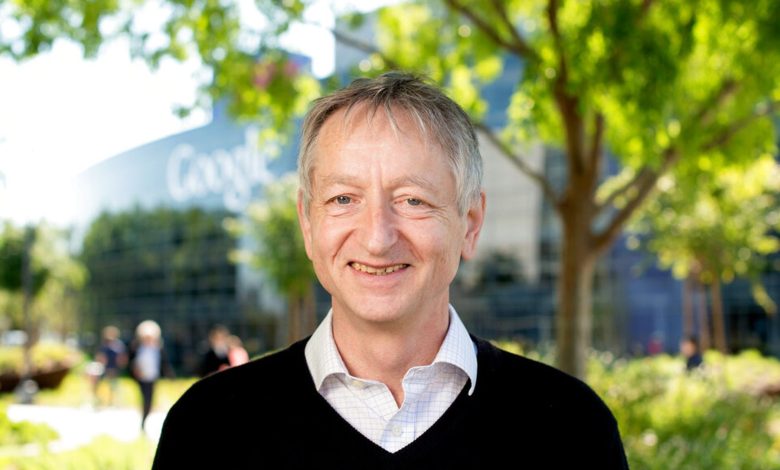
Geoffrey Hinton, widely regarded as the “godfather of AI,” has been awarded the Nobel Prize in Physics 2024 for his groundbreaking work in artificial intelligence. Hinton shares this prestigious honor with John Hopfield of Princeton University, marking a significant milestone in the field of machine learning and neural networks.
Main Points
Foundational Discoveries
Hinton and Hopfield were recognized for their foundational discoveries and inventions that have enabled machine learning with artificial neural networks. Their work has revolutionized various fields, including particle physics, material science, and astrophysics, and has found applications in everyday life, such as facial recognition and language translation.
Early Life and Education
Geoffrey Hinton was born in Britain and later moved to Canada, where he pursued his academic career. He earned his Ph.D. in Artificial Intelligence from the University of Edinburgh, laying the foundation for his future contributions to the field of AI.
Career and Contributions
Hinton’s career has been marked by numerous contributions to the development of artificial neural networks. His research in the 1980s and 1990s laid the groundwork for deep learning, which underpins many of the most powerful AI models in use today. Hinton’s work has been instrumental in advancing the capabilities of AI and expanding its applications across various domains.
Nobel Prize Recognition
The Nobel Committee for Physics highlighted Hinton’s use of fundamental concepts from statistical physics to design artificial neural networks that function as associative memories and find patterns in large data sets. Ellen Moons, the chair of the Nobel Committee for Physics, praised the laureates for their innovative contributions to the field of AI.
Public Reaction
The announcement of Hinton’s Nobel Prize has been met with widespread acclaim and excitement within the scientific community and beyond. Many have lauded his pioneering work and its impact on the advancement of AI technology. Social media platforms are buzzing with congratulatory messages and discussions about the significance of his achievements.
Future Implications
Hinton’s Nobel Prize win is expected to have far-reaching implications for the field of AI and machine learning. It underscores the importance of continued research and innovation in these areas and highlights the potential for AI to drive advancements in various scientific and technological fields.
Personal Reflections
In an interview following the announcement, Hinton expressed his surprise and gratitude for the honor. He stated that he had no expectations of receiving the Nobel Prize and was deeply honored to be included among the laureates. Hinton’s humility and dedication to his work have endeared him to colleagues and admirers alike.
Impact on AI Research
Hinton’s Nobel Prize win is expected to inspire further research and development in the field of AI. His contributions have already paved the way for numerous advancements, and his recognition is likely to encourage more scientists and researchers to explore the potential of artificial neural networks and deep learning.
Broader Significance
The Nobel Prize awarded to Geoffrey Hinton and John Hopfield highlights the growing importance of AI in modern science and technology. It serves as a reminder of the transformative power of AI and the need for continued investment in research and development to harness its full potential.