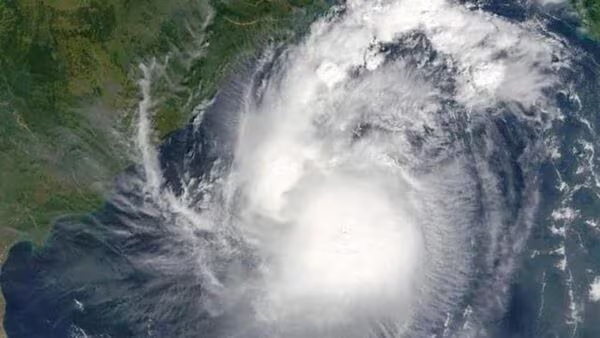
Cyclone Fani, a severe cyclonic storm, has made landfall in Odisha, causing widespread concern and prompting extensive precautionary measures. The India Meteorological Department (IMD) has issued warnings of heavy rainfall, strong winds, and potential flooding in the coastal regions. This article provides an in-depth look at the current situation, the expected impact, and the measures being taken to mitigate the damage.
Main Points
Formation and Path of Cyclone Fani
Cyclone Fani originated as a low-pressure area over the Bay of Bengal and intensified into a severe cyclonic storm. The IMD has been closely monitoring its path and intensity. The cyclone made landfall near Puri, Odisha, bringing with it wind speeds of up to 200 km/h. The storm is expected to move northwestwards, affecting several districts in Odisha and parts of West Bengal.
Impact on Coastal Regions
The coastal regions of Odisha, including districts like Puri, Bhubaneswar, and Cuttack, are experiencing heavy rainfall and strong winds. The IMD has predicted that the storm will cause significant damage to infrastructure, uproot trees, and disrupt power supply. Low-lying areas are particularly vulnerable to flooding, and there is a risk of tidal waves inundating coastal villages.
Precautionary Measures
Authorities in Odisha have taken extensive precautionary measures to minimize the impact of Cyclone Fani. Fishermen have been advised to return to the shore, and the state government has set up relief camps stocked with essential supplies such as food, water, and medical aid. Evacuation plans are in place for residents in vulnerable areas, and emergency response teams are on standby to provide assistance.
Government and NDRF Response
The National Disaster Response Force (NDRF) has deployed multiple teams to the affected regions. The NDRF teams are equipped with boats, life jackets, and other necessary equipment to carry out rescue and relief operations. The state government has also activated its emergency response protocols, ensuring that all resources are directed towards mitigating the impact of the cyclone.
Disruption to Daily Life
The cyclone has significantly disrupted daily life in the affected regions. Schools, colleges, and offices have been closed, and public transportation services have been suspended. Residents are advised to stay indoors and avoid unnecessary travel. The government has urged people to keep emergency contact numbers handy and to follow instructions from local authorities.
Economic Impact
The economic impact of Cyclone Fani is expected to be substantial. The agricultural sector, in particular, is likely to suffer significant losses due to heavy rainfall and flooding. Paddy fields, vegetable crops, and other agricultural produce may be damaged. The fishing industry is also affected, as fishermen are unable to venture out to sea. The state government is preparing to provide financial assistance to affected farmers and fishermen.
Community Support and Solidarity
In times of crisis, community support and solidarity play a vital role in overcoming challenges. Local volunteers and organizations are mobilizing resources to assist those affected by the cyclone. Social media platforms are being used to spread awareness and coordinate relief efforts. The spirit of unity and resilience is evident as people come together to help each other during this difficult time.
Long-Term Recovery Efforts
Post-cyclone recovery efforts will be crucial in restoring normalcy in the affected areas. The government has allocated funds for immediate relief and rehabilitation. NGOs and community organizations are also gearing up to provide support to those in need. The focus will be on restoring infrastructure, providing medical aid, and ensuring the safety of residents.
International Assistance
The severity of Cyclone Fani has prompted offers of assistance from the international community. Several countries and international organizations have expressed their willingness to provide aid and support. The Indian government is coordinating with these entities to ensure that relief efforts are efficient and effective.
Environmental Impact
The environmental impact of Cyclone Fani cannot be overlooked. The cyclone has caused significant damage to coastal ecosystems, including mangroves and marine life. Efforts will be needed to restore these ecosystems and mitigate the long-term environmental consequences of the storm.