
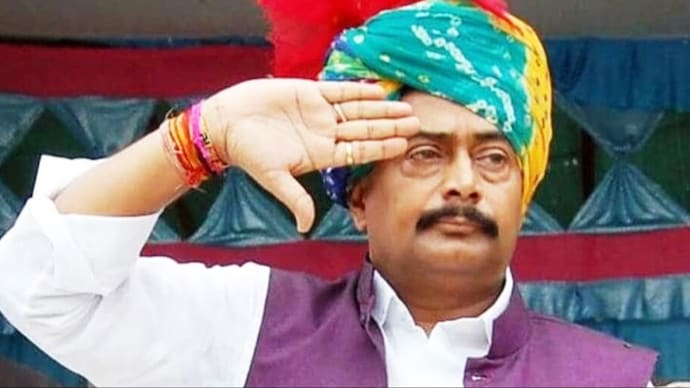
In a dramatic turn of events, Deepak Joshi, the former BJP minister, has officially rejoined the Bharatiya Janata Party (BJP), marking a significant moment in Madhya Pradesh’s political landscape. His return comes after a brief stint with the Congress party, a move that has sparked considerable attention and speculation regarding the shifting alliances ahead of key elections. This article dives deep into the circumstances surrounding Deepak Joshi’s political journey, his legacy, and what his return means for the BJP and the political fabric of Madhya Pradesh.
Main Points
The Political Journey of Deepak Joshi
Early Years and Political Rise
Deepak Joshi is not a new name in the Madhya Pradesh political scene. The son of former Chief Minister Kailash Joshi, Deepak’s entry into politics was almost inevitable. He first made his mark by securing the Bagli assembly seat in 2003. Over the years, he gained prominence within the BJP, succeeding in multiple elections, including a win in Hathpiplya in 2013. His political trajectory seemed on an upward trajectory, especially when he served as the Minister of Technical Education and Skills Development and later, the Minister of School Education in the Shivraj Singh Chouhan-led government.
However, Deepak Joshi’s journey was not without its ups and downs. His political career faced a major setback in 2018 when he lost his seat to Congress in a highly competitive election. This defeat was a significant blow, as it marked the end of a long streak of electoral successes for Joshi.
The Shift to Congress
In 2020, during a period of intense political turmoil in Madhya Pradesh, Deepak Joshi made a bold decision to leave the BJP and join the Congress. His move was part of a broader shift in the political allegiances in the state, particularly with the fallout of Jyotiraditya Scindia’s defection to the BJP. Joshi’s switch to Congress was seen as a strategic decision, aligning himself with the party that had gained momentum after the political realignment.
His decision was significant, not just because of his political standing, but because of his family’s deep-rooted connections within the BJP. The Joshi family’s legacy in the BJP had been long-standing, and his departure was seen as a major loss for the party. Joshi’s tenure with Congress, however, was short-lived, and the political tides in Madhya Pradesh were soon to shift once again.
Deepak Joshi’s Return to BJP
Timing of the Return
In a surprising political move, Deepak Joshi returned to the BJP in 2024, just ahead of crucial elections in the state. The timing of his return is significant, as Madhya Pradesh gears up for important assembly elections, including a by-election in Budhni, a constituency that has seen its fair share of political drama in recent years. Deepak Joshi’s re-entry is seen as a strategic move, not only for the BJP but also for his own political future.
The event was marked by his joining ceremony in Budhni, where Union Agriculture Minister Shivraj Singh Chouhan was present to welcome him back into the party fold. This re-entry has been seen as a major political event, signaling the BJP’s confidence in Joshi’s abilities to once again serve as a key player in the party’s Madhya Pradesh strategy.
Relevance in the Current Political Scenario
Deepak Joshi’s return is viewed as a strategic step for the BJP, as the party seeks to consolidate its position in Madhya Pradesh ahead of the upcoming elections. His experience, especially in the education and technical sectors, adds weight to the BJP’s agenda. Additionally, his longstanding ties to the state’s political landscape, including his family’s legacy, make him an asset for the party, especially in areas with a strong BJP presence.
The Congress party, which Joshi left in 2020, has also been making strides in the state, particularly after the defection of several BJP leaders. However, Joshi’s return to the BJP is seen as an attempt to regain lost ground and strengthen the party’s hold over its traditional strongholds.
What Does This Mean for the BJP?
For the BJP, Deepak Joshi’s return could be a game-changer in several ways. His political experience and leadership in Madhya Pradesh are crucial, especially in the context of the ongoing power struggles in the state. Joshi’s association with BJP’s key figures, such as Shivraj Singh Chouhan, strengthens the party’s internal unity.
Additionally, with elections around the corner, having a familiar and influential face like Joshi back in the fold can help the BJP solidify its position. His return may also be a signal to other former BJP members who switched parties that the BJP remains a powerful force, capable of bouncing back after political losses.
Deepak Joshi’s Legacy: A Family of Politicians
The Joshi Family’s Political Influence
Deepak Joshi is part of a family with a strong political legacy. His father, Kailash Joshi, served as the Chief Minister of Madhya Pradesh from 1977 to 1978, and his political stature within the state is still felt today. This legacy has played a pivotal role in shaping Deepak Joshi’s own political path, as he worked to build on his father’s reputation while carving his own niche in the BJP.
Despite the challenges, including electoral defeats, Deepak Joshi has maintained a level of influence in the state’s politics. His father’s political influence continues to serve as a foundation for his own career, allowing him to navigate the complexities of Madhya Pradesh’s political environment.
Joshi’s Contribution to Education and Development
During his time in the BJP government, Joshi was instrumental in pushing for reforms in the education sector. As the Minister of School Education, he worked on various initiatives aimed at improving the quality of education in the state, focusing on both infrastructure and teacher training. His tenure was marked by efforts to modernize the education system and increase access to quality education for underprivileged students.
In the technical education sector, Joshi’s leadership helped launch programs aimed at skill development, a crucial area in Madhya Pradesh’s economic development. These contributions have earned him recognition beyond his political career, establishing him as a key figure in the state’s educational reforms.
Political Significance of Joshi’s Return
BJP’s Strategy for Madhya Pradesh
With Madhya Pradesh poised for another round of elections, the BJP is keen on re-establishing its dominance in the state. The party’s strategy involves bringing back experienced leaders like Deepak Joshi, who can rally support among key constituencies. His re-entry provides the BJP with a seasoned politician who understands both the political and administrative landscape of the state.
Joshi’s return is also part of the larger trend in which BJP is welcoming back defectors who had left the party for various reasons, signaling that the BJP remains a formidable force in the state’s politics.
Challenges Ahead for Joshi and the BJP
While Joshi’s return has been met with support from BJP leaders, the political challenges in Madhya Pradesh remain formidable. The Congress party, with its own set of loyalists and defectors from BJP, is expected to be a strong competitor in the upcoming elections. Additionally, Joshi will have to contend with the legacy of his past defeats and work hard to regain the trust of voters in his constituency.
The BJP’s challenge will be to leverage Joshi’s strengths while addressing the criticisms that have emerged due to internal power struggles and defection issues. The next few months will be critical for both Deepak Joshi and the BJP as they navigate the complex political terrain ahead.
Deepak Joshi’s return to the BJP is undoubtedly a political milestone, with far-reaching implications for Madhya Pradesh’s upcoming elections. As the party prepares for critical battles in the state, Joshi’s re-entry is a powerful reminder of the constantly shifting political landscape in India.


