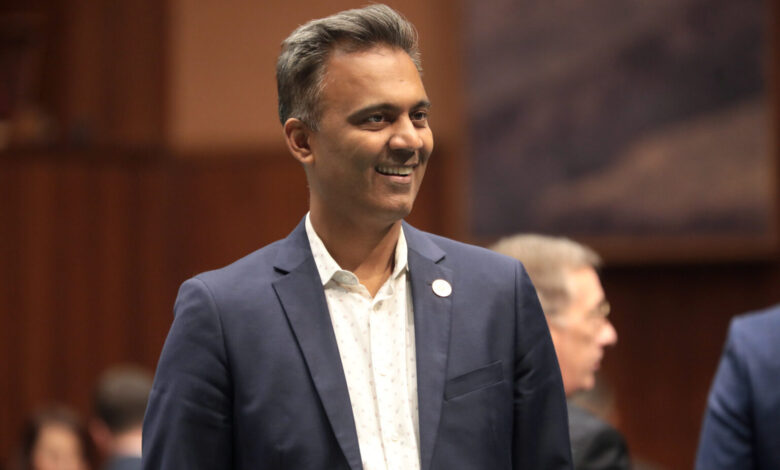
In a thrilling development in Arizona’s 1st Congressional District, Democratic candidate Amish Shah has emerged with a narrow lead over Republican incumbent David Schweikert after the release of the initial batch of election results. As of the latest counts, Shah, a physician with years of experience as an emergency department doctor and a former Arizona State Representative, is leading by 50.9% to Schweikert’s 49.1%, with a margin of about 4,693 votes.
The race has captured significant attention due to the close margin and the dynamic nature of the district, which covers parts of northeast Phoenix, Scottsdale, and the surrounding suburbs. This district is well-known for being competitive, and the early results suggest a potential shift in political dynamics, with Shah’s performance signaling strong support for a change in representation.
Main Points
Who is Amish Shah?
Amish Shah, a 47-year-old physician and community advocate, won the Democratic primary earlier in 2024, defeating several notable candidates to secure his position in the race against the seven-term incumbent Schweikert. Shah’s professional background in emergency medicine and his leadership in the Arizona House of Representatives for three terms set him apart as a dedicated public servant.
Born in Chicago to Indian immigrant parents, Shah has been an active proponent of healthcare reform and community health initiatives. He is also known for his work founding the Arizona Vegetarian Food Festival, aimed at promoting healthy eating and sustainable lifestyles. His victory in the primary highlighted his growing influence within the district, especially among voters seeking a fresh perspective in Congress.
David Schweikert: The Incumbent Facing Challenges
David Schweikert, who has served as a U.S. Representative since 2011, has found himself in a tight race against Shah, despite the incumbent’s deep political roots. Schweikert narrowly won his previous re-election bid in 2022, which was marred by campaign finance allegations. These controversies, which included misreporting campaign spending and using funds for personal purposes, led to a hefty fine for his campaign committee from the Federal Elections Commission.
These scandals, combined with the growing influence of younger and more progressive candidates like Shah, have contributed to the current shift in the race. The district, once firmly in the hands of Republicans, has become increasingly contested as voters express dissatisfaction with the status quo.
What’s at Stake in Arizona’s 1st Congressional District?
The outcome of this race holds significant implications not only for Arizona but for the balance of power in the U.S. House of Representatives. Arizona’s political landscape has been rapidly changing, with suburban areas seeing a shift in political allegiance. The 1st Congressional District, in particular, has become a battleground for both major political parties, with candidates like Shah aiming to tap into voter concerns over healthcare, climate change, and economic inequality.
The district’s electorate is diverse, with a mix of traditional conservative voters and an increasingly progressive demographic. Shah’s appeal as a moderate Democrat, combined with his background in healthcare, has resonated with many voters, particularly as healthcare remains a critical issue in the state. His campaign has emphasized the need for better healthcare access, fairer economic policies, and solutions to environmental challenges.
Early Results and Impact on the Election
As of the latest reports, Shah’s lead is still relatively slim, with only the first batch of votes counted. Maricopa County, one of the largest and most influential regions in the district, has yet to release its final vote tally, which means the race could shift as more results come in. However, Shah’s early lead has certainly made waves, signaling that the Republican stronghold in the district may be weakening.
Schweikert’s camp has already stated that they will continue to fight hard as more results are released, with the hope that the remaining ballots will favor the incumbent. The race is expected to be one of the closest and most hotly contested in the upcoming election cycle.
Voter Sentiment in the District
Political analysts have pointed to a growing sense of dissatisfaction with traditional political elites in Arizona, especially in suburban districts like CD1. The suburban areas around Phoenix, including Scottsdale and Paradise Valley, have been shifting toward Democratic candidates in recent years, making it a key battleground in 2024. Voters in these areas are particularly concerned about issues such as healthcare, affordable housing, and the ongoing climate crisis, which are central to Shah’s platform.
Shah’s campaign has worked hard to position him as a representative of the people, highlighting his background in healthcare and his deep connection to the community. His message of change and reform has resonated with many voters who are disillusioned by Schweikert’s long tenure and the controversies surrounding his campaign.
Looking Ahead: What’s Next for Amish Shah and David Schweikert?
With the election still ongoing and more votes yet to be counted, the race for Arizona’s 1st Congressional District remains tight. Shah’s strong start has positioned him well, but Schweikert is a seasoned campaigner who will likely continue to fight hard in the coming weeks.
Voters in the district are expected to focus heavily on issues like healthcare, the economy, and climate change as they head to the polls. The outcome of this race could have lasting effects on Arizona’s political landscape, potentially shifting the district further toward the Democratic party.
As the results come in and more ballots are counted, all eyes will be on the final outcome of this high-stakes race. With such a narrow margin, every vote counts, and the next few weeks will be crucial in determining the future of Arizona’s 1st Congressional District.
This race not only represents a local political shift but also mirrors larger national trends of voter dissatisfaction with established incumbents and a growing demand for change at the federal level. The outcome of this election could serve as a bellwether for upcoming races across the country, making it one to watch closely as it develops.